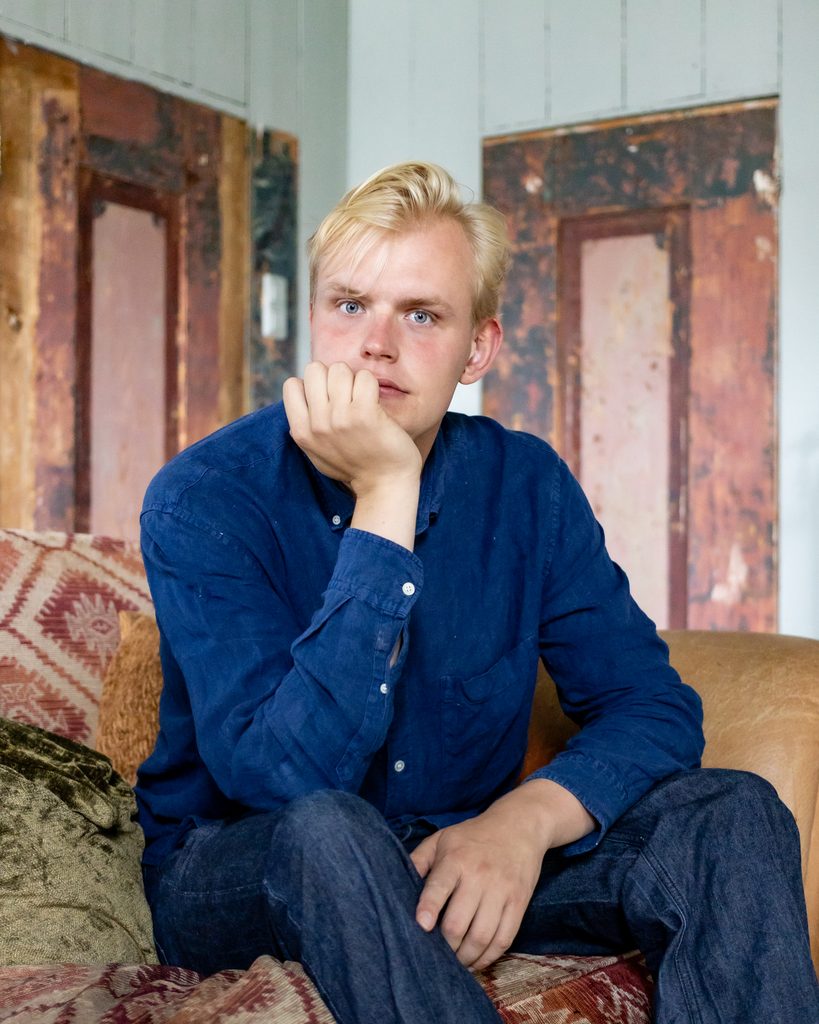
Marc Sentenie
Slagwerker, improvisator,
geluidszoeker en verzinner
Percussionist, improviser,
sound explorer and idea-maker
Voor slagwerker Marc Sentenie staat geluid op de eerste plaats en is zijn instrumentarium het middel om daarmee op avontuur te gaan. Om onverwachte geluiden te vinden en die in een (muzikale) context te plaatsen, gebruikt hij voor zijn klankvocabulaire experimentele technieken op het slagwerk en vliegt hij de muziek aan vanuit gekke invalshoeken. Hiervoor laat hij zich inspireren door uiteenlopende “vrije vogels“: van Morton Feldman en Roald Dahl tot Misha Mengelberg en Wes Anderson. In de geluidsvoorstellingen die hij maakt ligt in de klankwerelden die ontstaan de focus op textuur en structuur, waarbij hij zijn medemuzikanten en zichzelf uitnodigt tot improvisatie. In de spanning van het moment die op deze manier ontstaat, wordt het publiek uitgedaagd om op een andere manier te luisteren en te kijken dan dat zij misschien wel gewend is.
For percussionist Marc Sentenie, sound comes first and his instruments are the way to explore the adventure. To find unexpected sounds and place them in a (musical) context, he searches for extended techniques in percussion and playful angles for approaching the music. For this he draws inspiration from a diverse array of “vrij vogels” (free spirits) — from Morton Feldman and Roald Dahl to Misha Mengelberg and Wes Anderson. In the sound performances he creates, the focus lies on texture and structure in the sound worlds that emerge, and he invites his fellow musicians and himself to improvise. By seeking the tension of the moment in this way, the audience is challenged to listen and look differently than they might be used to.
With Question Marc I play my own compositions — including Squicky Squirrels and Vlieger — with Oene van Geel (viola), Joshua Herwig (cello) and Arnold Dooyeweerd (double bass).
With the collective Puinzooi we made percussion from trash, trumpets from PVC pipes, costumes from old overalls, and I composed using musical notes as sustainably as possible.
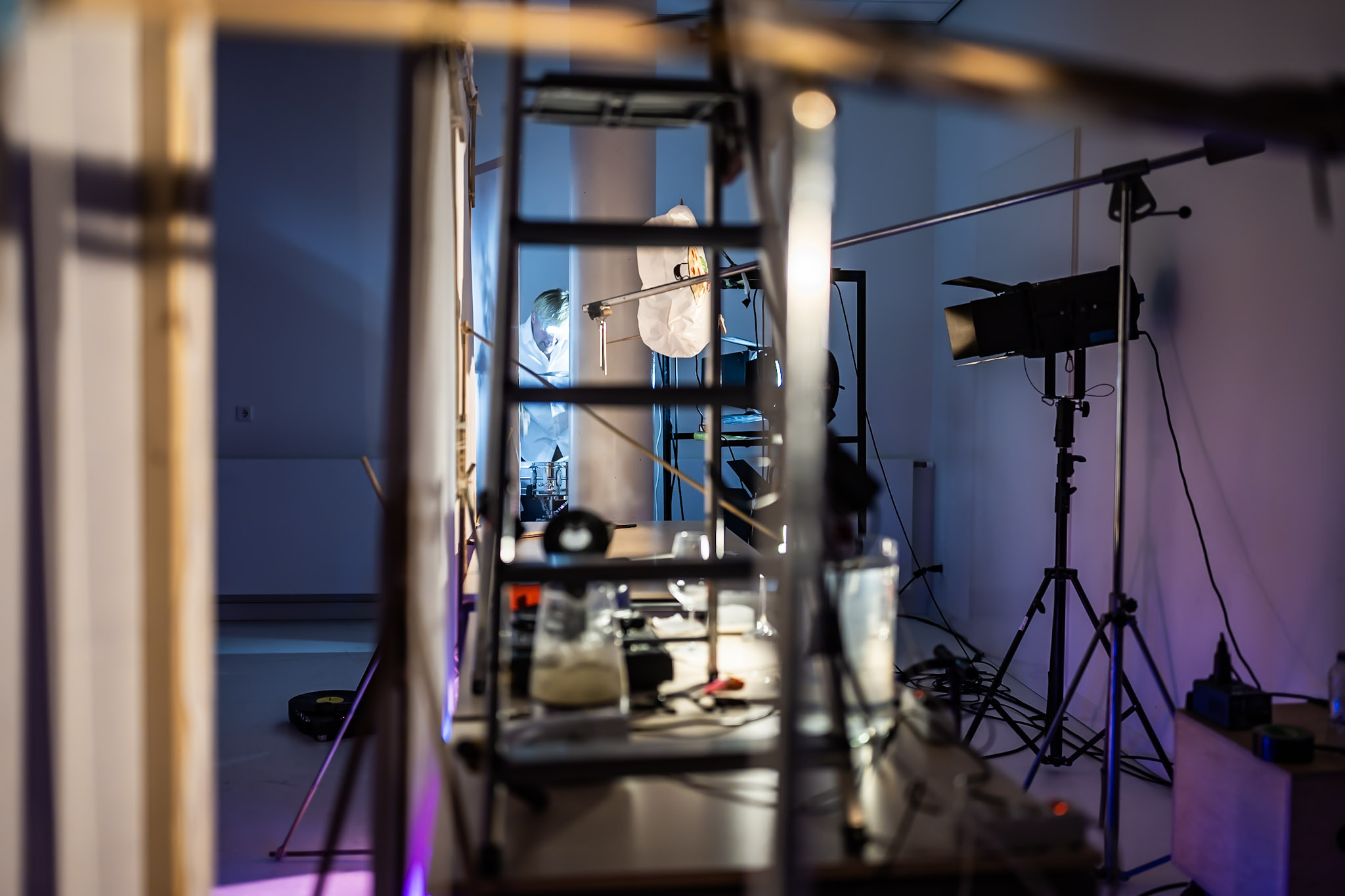
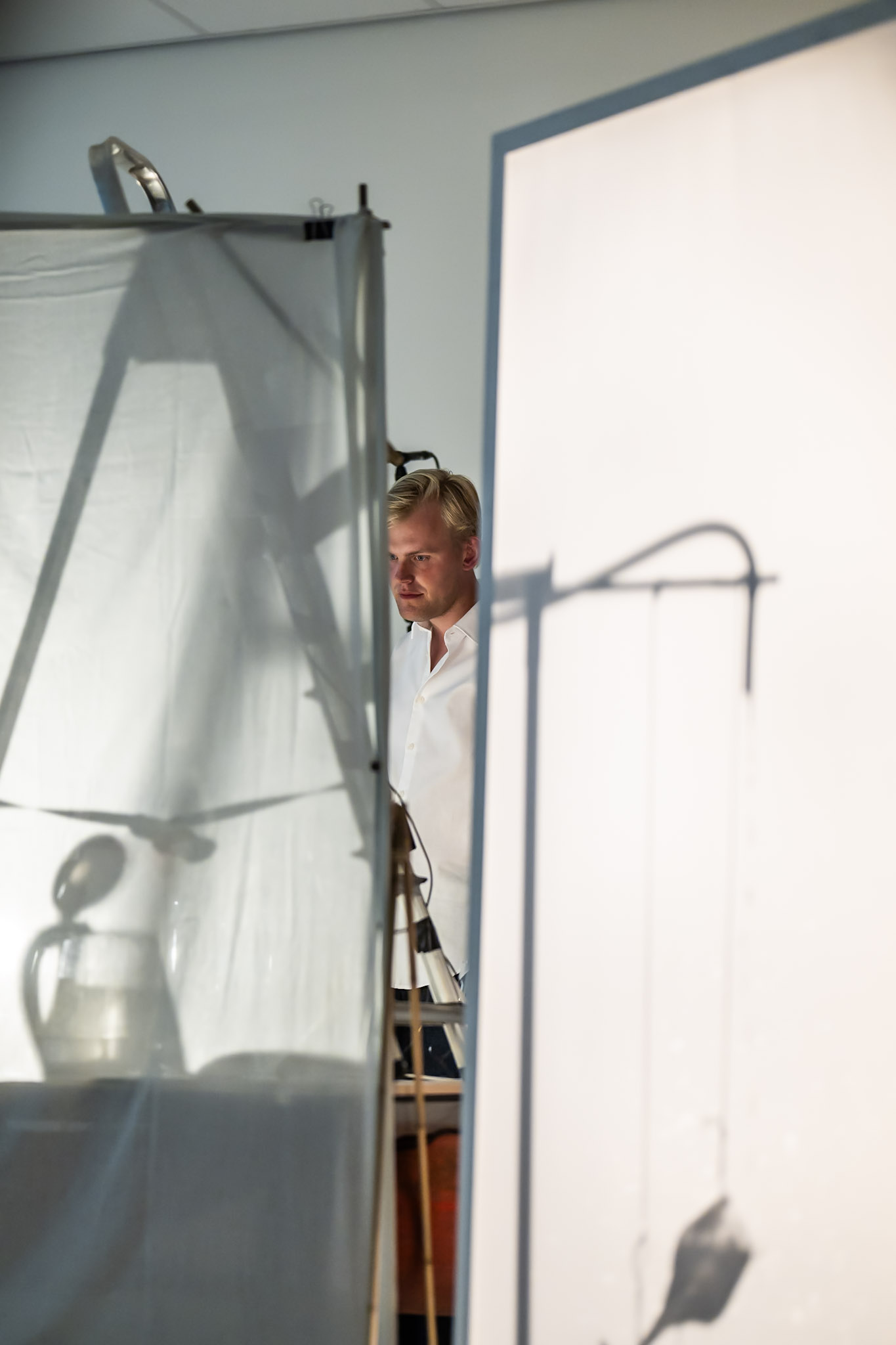
During my residency week in the summer of 2026 at the Werkplaats of the Zwolse Theaters, I explored how I, as a percussionist, can find more freedom in sound, movement, and space. As a maker, I wanted to play with and research shadows, creating a visual world alongside an auditory one to immerse the audience.
Moore Street Market – Noel Kelehan
Arrangement Ricciotti ensemble
Ricciotti’s Shamrock Shuffle (2024)
Carrousel – Anaïs Vijgen
Arrangement Ricciotti ensemble
Ricciotti’s Ronde van België (2025)

Question Marc
Foto: Anosh ter Haar
SCHADUWPOPPENKAST
Foto: Kasper Veenstra
Research Master of Music ArtEZ
Marc Sentenie Master of Music ArtEZ 2025/2026
Table of Contents
- Introduction
- Extended Techniques
- Context of extended technqiues: improvised music
- Broader context: the world outside
- Future
- Reflections on master
- Selection of Activities
- Appendix 1
Introduction
“Can improvisation be taught? How else but by being in the presence of an improviser improvising, watching a live lesson in emoting? What more is there to teach other then that everyone must discover their own ways and needs? […] If there must be an education, may it be selftaught, and may it teach a preference for solitude.”
Le Quan Ninh – from La voie negative
During my second year of the master’s program at the Arnhem conservatory, my perspective on what I wanted to learn slowly shifted. Regarding teachers, I gathered a group of eccentric, free-spirited people around me. Where I initially tried to learn what they did as “vrije vogels”, I increasingly realized that ultimately I wanted to become a “vrije vogel” myself. What attracts me to free spirits is that they do their own thing, which meant I had to find and do my own thing as well.
VRIJE VOGEL – SOMEONE (READ: ARTIST) WHO DOES NOT ADHERE TO APPARENTLY IMPOSED RULES AND MAKES WHAT THEY WANT TO MAKE AND DOES WHAT THEY WANT TO DO, WITHOUT (MAKING TOO MANY) CONCESSIONS – DEFINITION FROM THE DICTIONARY BY MARC SENTENIE ON 4/9/2026
As a child I started drumming in part because Bobby McFerrin CDs were often playing in the car. On the back seat I would imitate him by singing and drumming on my own body and on anything loose or fixed. If anyone is an eccentric free spirit to me, it’s Bobby McFerrin. I think my preference for quirky, fresh, and slightly offbeat music can be traced back in part to this.
One of the paths I was already on, but wanted to follow more deeply, was the transformation from drummer to percussionist. Looking back on my role as a percussionist in the youth orchestras I played in, I sometimes felt more at home there than in the musical situations where I was a drummer. It likely had to do with the youth orchestras having more of a hobby vibe, and studying at a conservatory brought a different focus to the music I made. I wanted to be able to apply the colorful and dynamic qualities I experienced playing classical music as a percussionist to my own playing and music.
I also increasingly felt constrained by the drummer role as conceived within the American jazz tradition. Why try to imitate something from another country as perfectly as possible when I’m not from there and could never meet the same expectations because of my own background? The Dutch way that, among others, Misha Mengelberg and Han Bennink approached American jazz — which, to me, still seeps through parts of the Dutch jazz scene — appeals to me: trying to do something in your own way rather than copying it precisely.
In the second year of my master’s I looked for what I want to create and how I want to sound, which turned out to be a personal quest. I pursued this partly by literally searching for “my own sound”: studying extended techniques in an attempt to build my own sonic vocabulary and use it in improvised contexts. In addition, through lessons with Mariëlle Woltering and coaching sessions with Albert van Veenendaal, I began writing much more about how I feel, what I want, and what I struggle with. As a routine, I started each morning by writing three pages as the very first activity of the day — an exercise from the book The Artist’s Way. I felt this step was necessary to transform myself from drummer to artist. I would like to call myself an artist, but for that it proved important to get to know myself better through self-examination.
Through all these processes and investigations, to continue the metaphor, I tried to learn to fly myself and, as a free spirit, follow my own course. On that course I hope to meet other free spirits and together head toward the horizon to new, yet unknown (musical) adventures.
Extended techniques
Why?
As a musician (and as a listener) I want to create a (sonic) world in which:
- sounds occur that are not the standard noises you expect from an instrument. Specifically for percussion, these are not the sounds of sticks on drums and cymbals. It is then clearly traceable that the sound comes from a drum kit.
- it is no longer clear which instrument produces which sound — and that this no longer matters. The focus becomes the whole sound rather than the individual sounds of individual musicians.
- there is a wide variety of sounds: including ugly or initially unpleasant sounds that create dissonance.
- tension is deliberately sought, for example through sound choices and silences. This is not about making sounds unrecognizable, but about changing expectations within the music. I think the listener (here meaning both the musician and the audience) is surprised by other sounds, and improvised music can therefore go to different places. To be able to contribute to improvised music in this way myself, I am researching extended techniques for percussion.
Through this research I can add new sounds to my vocabulary. I also increasingly feel that I would rather call myself a percussionist than a drummer. The difference lies in the setup and materials I use. New sonic vocabulary moves me away from the standard drum kit, which for me is a positive development toward a different and more personal sound and approach. Also, a drummer seems mainly concerned with tempo, while a percussionist is more concerned with timbres. For me, tempo can sometimes lock the music — or at least lock me in as a drummer. By working with extended techniques I hope to find a different entry into improvised music; under the label “drummer” I felt it was difficult to develop further in the direction I want.
How?
For my own search for sounds I am inspired by percussionists Le Quan Ninh, Ingar Zach and Toma Gouband. Listening to them and watching videos inspired me to experiment and to copy certain techniques they use. Each of them has developed a completely personal approach to sound and can be identified as percussionists, sound artists and improvisers. That appeals strongly to me: in my eyes and ears they are no longer drummers. They work in a different idiom and vocabulary, with their own setup and instrumentarium, and thus a different sonic world compared to drummers behind a standard kit. As a result, the music they make sounds different. All three use a tilted large drum as a sound resonator. By placing materials on the head, the sound is amplified or altered, producing new sounds. My focus is also on trying things out: simply researching and experimenting to see what happens and which sounds result. In most of my search for sounds using extended techniques I use the snare drum as a resonator with materials on it or use the bow to bow certain objects.
Approach
While testing materials and sounds I try to document everything. I do this by writing detailed notes in a notebook. This creates a greater focus on details: instead of jumping from sound to sound I linger longer and try to discover what is possible. Another benefit of documenting is that it feels less loose and gives me a sense that I am working on something.
Searching for sounds requires a different approach than I was used to: more experimenting and therefore not always knowing exactly what I’m doing or what the result will be. That raises questions: When is a sound interesting? When is something more than just a sound? When can I use it?
A possible answer for me at the moment is the details in sound. Is it possible to develop a sound — for example in dynamics, speed or pitch? Can the timbre be “manipulated”: can you extract different sounds from the same material? I discovered, for example, that damping the snare drum head changes its resonance and thus the sound.
Working in detail with sounds sometimes still feels abstract, but in improvised musical settings I increasingly hear where I can deploy a sound. This differs from producing a random sound in the hope it will fit. I’m also better able to identify qualities of sounds used by other musicians in different “categories” and base my choices on that, either complementing or contrasting. Those categories include the directness of a sound and the length of notes (long or short).
Sounds that emerged from experimenting during the experiments I made various notes in my notebook. I chose to list the different sounds I found during the experiments below rather than transcribe all the details I recorded. That choice is because the process was important to me, but it does not need to become a cookbook/tutorial on exactly how someone else can produce the sound.
- Blowing into a small cymbal
Blowing or making other sounds through the hole in a cymbal amplifies the sound. The effect resembles, for example, the sound trumpeters make when they blow only through their mouthpiece without producing a tone. - Singing bowl on snare drum with pins
Placing small pins in the singing bowl produces extra vibration from the pins when I play the bowl with sticks or a bow. The pins also add higher resonances alongside the bowl’s own sound/resonances. - Bowing a singing bowl with pins on snare drum with knitting needle on the snare
By accident — because I forgot to remove the knitting needle from the head — I discovered an extra layer of sound when I bowed the bowl with this addition. The bowl’s vibration “activates” the knitting needle, causing it to resonate with the head. The position of both the bowl and the knitting needle is important; only in one specific position does the needle vibrate. - Singing bowl (with pins) on inverted snare drum
When the snare is inverted the snares lie on the head due to gravity. They vibrate when I bow or strike the singing bowl, adding extra pitches to the bowl’s sound. By tightening or loosening the snares I can influence the sound possibilities in addition to bowing variables (speed/position on the bowl/position of the bow). - Bowing a small cymbal
Bowing a small cymbal on a snare drum produces high, sustained tones. I can change the pitch by moving the cymbal’s position on the snare. For more grip I attach a hi-hat clutch to the cymbal and use the clutch as a handle. - Bowing cymbals
Bowing a cymbal yields various sustained notes. The bowing technique affects the timbre: for example the bow hair’s position relative to the cymbal, the speed of the bow and the pressure applied. - Bowing a knitting needle on the snare drum
Bowing the knitting needle causes the drum to resonate and produce a tone. The sound is influenced by the bow’s position relative to the needle, the needle’s position on the snare, and the pressure applied with the bow. - Bowing and striking wine glasses + small bowl (+ effect of snares)
By striking and bowing different wine glasses I can add these sounds to my vocabulary. The mallet’s hardness affects the tone: the harder the mallet, the clearer the pitch from the glass. The base (the “foot”) of the glass also produces a different sound from the glass itself and can be bowed to produce a thin high sound. If the snares of the snare drum rest on the drum head and I hold a glass near the drum, the drum will resonate and add an extra layer to the glass sound. - Small stone (in a tin can) on snare drum
Inspired by Toma Gouband I experimented with stones. Moving a small stone across the snare drum produces noise. The stone’s shape influences the sound. Also inspired by Le Quan Ninh, I place a stone on the snare drum with a tin can above it. By moving the can in circles over the snare I create a sound consisting of three parts: the can’s noise on the head, the stone bouncing on the head, and the stone bouncing against the can’s rim. The speed at which I move the can affects the stone’s bouncing speed, as does how I hold the can. The more I damp the can, the more muted the sound. If I damp the head with my other hand, the tone produced by friction from the can disappears. - Olive tin and corn tin (on snare drum)
Rotating the bottoms of these tins along the snare drum rim produces a sound that occupies a lot of space. Different tin sizes produce different pitch ranges. I can also bow the olive tin with my bow to get a sustained low sound. The tin’s position relative to the bow affects the tones available.
Video
Each sound above can be heard in this video:
Conclusion of experiments
- By experimenting and using materials that don’t belong to the drum kit (e.g., a tin can or a wine glass), I have added new sounds to my vocabulary. It requires a different way of practicing because these are techniques I did not know and had to figure out myself. I am still working on this.
- All sounds are acoustic and not altered by microphones or effects. I noticed that acoustic sounds most appeal to me to produce myself.
- Some of the sounds I found are ways for a percussionist to play sustained sounds, not only the short sounds typical of a drum kit.
- Those sustained tones relate to the tonality of percussion I later recognized in the sounds I investigated. Right now I am especially interested in the micro-tonality: the tones I found with, for example, the wine glasses do not need to be precise pitches that fit Western notation. The resulting friction opens my ears.
- Because I lost a stone I used with the stone-and-can technique, I found that each stone has a different effect. This applies to all materials I use.
- I also encountered material limitations: some materials are not strong enough, like some of the wine glasses I use. A few have already broken, so I need to find a solution.
- Some sounds require specific preparation, like the singing bowl with the knitting needle on the snare. In a musical context where I must switch quickly between sounds, such preparations take too much time.
- The snares resonating with the snare drum became a recurring theme. For me they add an extra layer to the sound, making the sound more flexible and less recognizable, which is partly the goal of this search. However, the snares vibrating (when the snare is inverted) while other instruments play can affect another instrument’s sound, which is an issue. One solution I found is to place a thin stick between the snares and the head so they don’t touch. Another solution is to place one of my hands on the snares and head to stop them from vibrating.
Context of extended technqiues: improvised music
Improvisation
Over the past two years of my master’s I have discovered that there are many ways to improvise. In more traditional jazz settings, improvisation is usually understood primarily as soloing over chord changes. In that soloing a musical hierarchy often emerges, with the soloist supported by the rhythm section. A standard form and order is generally followed. What attracts me to freer improvised music is that both this hierarchy and that prescribed order matter much less. The instruments sit alongside each other on a more equal level, and by improvising music is created in the moment in terms of form, texture and direction.
In lessons with bassist Wilbert de Joode he pointed out the individuality of each player. To paraphrase Wilbert: if everyone drops dead while you’re playing, you must still be able to continue doing your idea — you must not be dependent on the other musicians. At the same time it is important to be aware of everything that is happening and sounding around you. It is then a conscious choice whether to follow that — for example in dynamics or texture — or to carve your own path. In a split second you must make decisions; if you think too long you’re too late and the music may already have moved in another direction.
One of the first things that attracted me to this way of improvising was the feeling that the music could change direction and texture at any moment: one moment it can be busy and loud, and suddenly the whole piece can become soft and still. For that you need fellow musicians who are very alert and have their antennae tuned to make such a quick transition.
What also attracts me to the freer form of improvisation is that there is more focus on creating textures in music. It can be more about texture because the fixed metronomic tempo is often released. You can choose to keep a tempo, but it is also possible to let it go. The music can have a certain flow or speed without fitting a specific metronomic pulse.
Lessons with Wilbert, and also with Etienne Nillisen, emphasized that when improvisers make deliberate and clear musical choices, the music benefits. If there is doubt in a musical gesture or it is not played with conviction, this creates vagueness in the music and for the fellow musicians. A half-hearted choice makes it hard for others (and yourself) to commit.
From this I also understood that improvising is very personal. It’s about the choices you make as a musician: which instruments and materials you choose and what you do with them. The beautiful — but sometimes complicated — thing is that improvised music is different every time. That makes it seem to me that there are no fixed rules, because each improvisation is a different blank canvas. As I progressed I realized that that is not the point; rather, it is a way of making music and being in a situation I had not previously opened myself to. By opening up I became more aware that not everything I played came from an intrinsic conviction — sometimes I played (and sometimes still do) just to make noise or because I felt I had to play according to perceived rules of a genre. This felt like putting on a mask instead of showing myself, and not standing fully behind the music. My aim is to play and make music I can stand fully behind.
Development during improvisation
Different places in the world improvise differently. The development within an improvised piece varies accordingly. From what I experienced and learned in lessons with Wilbert de Joode and Michael Vatcher, the Amsterdam improvised-music scene emphasizes interaction and speed. Through lessons with Etienne Nillisen I encountered the predominantly Norwegian group Dans les arbres (three of the four members are from Norway). In their music I noticed much more space and time taken in the improvisations.
Dans les arbres
The group consists of clarinetist Xavier Charles, guitarist Ivar Grydeland, pianist Christian Wallumrød and percussionist Ingar Zach. The way they improvise together appeals to me greatly. After listening repeatedly to their albums Dans les arbres and Canopée, I tried to identify what appeals to me:
- Sound world: the musicians make extensive use of extended techniques. This places me, as a listener, in a fresh sonic world where sounds are not easily traced back to an instrument. Their choices fit together so well that a collective group sound emerges.
- Development: each improvisation takes time to see what emerges in the moment. I feel a lot of calm in the sounds and the way the music unfolds. That calm results in many silences; they often choose not to play. That same calm creates space in the music for the sounds that are made.
- Clarity: this space makes the music clear and transparent. As a listener I have time to hear what is happening.
- Collective improvisation: because of that space and calm the collective aspect is audible. All instruments have an equal role; some sounds may come forward or recede at times, but there is no clear solo voice. This collective interplay appeals to me, partly because fixed role divisions between instruments disappear.
- Tempo: their improvisations treat tempo freely: if a steady tempo appears it does so in fragments. The music is therefore not “locked” by a tempo.
- Percussion: Ingar Zach’s contribution appeals to me, partly for his instrumentation: he uses, among other things, a large drum from which he gets different sounds by placing objects, ceramic bells and other percussion on it. He colors the music actively and adds tonal material through his instruments. It feels like a different approach than a “regular drummer.” That he developed his own setup and sonic vocabulary inspires me to follow my own path.
What do Dans les arbres say themselves?
Their music contains something elusive for me, which I think is their strength. There is a difference for me between a soundscape and what they do: there is more movement and not constant sound. Curious about how they view their approach and what they search for, I looked for their own words. From their website biography I found phrases such as: “dynamic textural sceneries” “unorthodox extended techniques” “the music moves gently but steadily ahead on broad planes of sound” I then found research writings by Ingar Zach and Ivar Grydeland where they discuss Dans les arbres.
Research
Ingar Zach writes in his research “The Vibrating Drum” about Dans les arbres:
“In Dans les arbres, I introduced ceramic microtonal bells, which to some extent laid the foundation for the sound of the ensemble together with Christian Wallumrød’s piano preparations, Ivar Grydeland’s prepared banjo, and Xavier Charles’ adaptive clarinet playing. These ensembles practice overlapping roles, breaking down usual expectations for the instruments with their expanded material palettes. All the members of these ensembles have opened up new terrain in their search for collective sound, and thus also contributed to the field of collective music creation.”
“There is no hierarchy in Dans les arbres. Each of us brings a personal palette to the table and plays an equal role in shaping the band’s sound as a whole.”
Ivar Grydeland writes in his research “What I think about when I think about improvisation” about Dans les arbres:
“Dans les arbres is always excavating the possibilities of imitation.”
“In Dans les arbres we often have anchors – short percussive sound objects that appear to be some kind of central anchor points that everything else relates to and circles around.”
“Dans les arbres is collectively oriented. From an atmosphere of trust and sense of responsibility, we are establishing collective bodies of sound, rather than subjecting ourselves to a conventional system of group and soloist(s). Interestingly, this collectivity seems to be best achieved through a great deal of self-centeredness and individuality. Or is it perhaps in spite of? My own playing, and my interpretation of the band members’ playing is that it is both self-centred/independent and collective/highly dependent at the same time.”
“The collective search for sounds that melt, for timbral unisons that bleed into each other, inevitably establish the continuums of Dans les arbres.”
My thoughts/conclusion for my own practice
- The approach of copying musical ideas/sounds felt at first contradictory to what I had been taught. For example, in improvisation workshops with Arnold Dooyeweerd at the Bimhuis (during my pre-conservatory training at the Utrecht conservatory) I learned that copying what is already being played had little point. Wilbert de Joode also warned me against taking others’ material: if something is already being done, why copy it? Yet it seems that for Dans les arbres such borrowing is part of their musical play.
- I was used to having my antennae tuned, which led me to grow dynamically during someone’s solo. In the freer music I discuss here it’s still important to be alert, but it is a conscious choice whether to follow. If someone decides to play stronger in dynamics or at higher density, other musicians don’t necessarily have to jump in. This sometimes feels counterintuitive for me, because my instinct is to follow another musician’s input. That is something I needed to unlearn. If musicians choose their own path — or at least have the option not to follow — improvisations become less fragmentary.
- Reading their research I found thoughts I might not have asked them about in an interview, but which are important for their music. For example, Ivar Grydeland writes about invitations:
“I invite when I play and am on a constant lookout for invitations from the others. I am listening for invitations to form connections, composites, coherence, continuum. Accepting some, rejecting most. How can what I do invite, and yet be able to stand on its own, if that should be needed? I need to be prepared for any of my own invitations to be rejected. Invitations and rejections. This awareness affects my choice of material, my listening.” I found it interesting that he articulated something I was working on subconsciously. Last year I worked on pieces intended as invitations to improvisation. I want my gestures in improvisation to be inviting for others to add to, and vice versa — other musicians’ playing should create openings for me. - By reading what these two Dans les arbres musicians write and reflecting, I hope to incorporate elements of their approach into my improvisations and better articulate what I seek in the improvised music I want to make.
Placing extended techniques in context
The sounds I have found and want to further develop I intend to use in musical contexts, primarily improvised settings. To test whether and when the sounds work I have improvised with various musicians, including saxophonists Norbert Lensink, Marcus Warnheim and Bartol Stopic, percussionist Matteo Gherardi, guitarist Manolis Matthaiakis, violaplayer Madelief Lammers and bassplayer Vos Arends . Playing and reflecting on these sessions produced thoughts described below.
Choice of musicians
All seven musicians I improvised with are involved in or open to improvised music. They are not alarmed by having no sheet music, no standards from the American Real Book, or no preset chord charts, but want to make music in the moment. They all focus on sound and how to make music with it, which differs from a focus only on melody or patterns over chord changes. It was important to me to be able to discuss improvisation and the sessions with them, so we could talk about what we were seeking in improvisation and which moments worked for us.
Choice of an instrument/sound
While improvising I continually make choices. As described above, it is important not to overthink, because otherwise I am too late. The decision-making in my improvisations differs from choosing which groove to play. One focus is the quality of a sound I add or the qualities of sounds already present. One choice is whether to add something complementary or something contrasting. Sound qualities can be:
- Direct or indirect
- High or low pitch
- Dynamics: loud or soft
- Long or short
- Density: many or few events
Internalizing my own sonic vocabulary
By studying my own sonic vocabulary, these sounds gradually become internalized. Where at first I might pick an instrument randomly just to make noise, I increasingly hear the sounds I intend to play in my head.
Volume of a sound & acoustics
When practicing alone I only have my own sounds. While improvising with others I became more aware that each sound has a maximum volume; some sounds are inherently very quiet. That means I cannot use those sounds at every moment if I want them to be audible. On the other hand, it asks the musicians I play with to be alert about volume so there is space to explore dynamic extremes. I prefer acoustic situations because then I have direct control and responsibility for my sound in the room and in relation to others.
Examples of my own sounds in context with others
Set-up
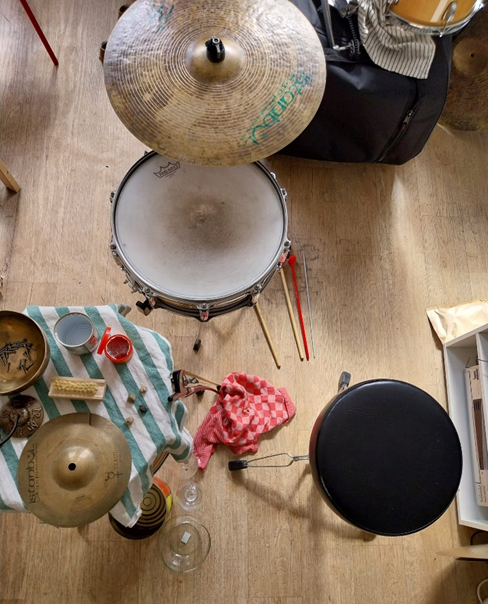
In these sessions I mainly used a snare drum, one cymbal and the materials described in my experiment list. That limit helped me choose consciously between the sounds I had discovered. Ultimately I aim to have my own setup like Ingar Zach’s, distinct from a standard drum kit, which I appreciate. In one session with Marcus Warnheim I still sat behind a drum kit and sometimes reverted to more standard drum sounds. After that session I tried to avoid that to develop and use my own vocabulary in improvised settings.
Listening back
I recorded some sessions and listened back alone and with duo partners. Listening back revealed what worked and what didn’t. That was often confronting and something I had to get over. I found that I wanted everything to be right immediately. Interestingly, when I listened back I sometimes found myself mentally playing along and making the same choices as on the recording — which felt like good choices because I still stood behind them. Often I wanted to pursue or develop an idea longer when listening back, whereas in the recordings ideas and textures had often changed quickly.
Thoughts/conclusions
By reflecting on my own and shared playing, discussing with other improvisers/teachers, and reading about improvisation (including Stephen Nachmanovitch’s Free Play and Le Quan Ninh’s The Negative View), I formulated moments and thoughts about when an improvisation gave positive energy and when it did not:
- Little or no time to think while playing is usually a positive sign. In those moments I have focus and ideas flow.
- The moments I have a big smile on my face, most of the times I’m enjoying the improvisation that is happening.
- If you’re in a place in the music that works, continue what you’re doing.
- Trust that the music will develop or that something will come for its development; you don’t have to force it. That’s an organic way of making music in the moment.
- Conversely, a bold statement can force the music in a new direction.
- Mental flexibility is important: others bring their own ideas. It is important to accept choices that differ from mine. The danger is that I go into my head, stop listening, and then find it very hard to return to the music.
- Mental calm is also crucial: to keep my attention on the music in the moment.
- This is challenging because I tend to focus too much on my own playing. Focusing on listening helps.
- Trusting the moment: not knowing what will happen is what attracts me to improvisation. It is also scary because I must let go of controlling the musical situation.
- Avoiding audible doubt in my playing: easier said than done. I think this can be helped by playing only when I truly feel I must. This conflicts somewhat with the first point, because that would imply deciding whether to play or not — and avoiding that thinking may be a prerequisite for improvisation.
Relating improvisational “success” to myself, rather than to a general or highly specific situation, helped me overcome a block during formulation.
Broader context: the world outside
Why?
Ultimately I want to share my sounds and improvisations with an audience and be able to (partly) earn a living as a professional musician. During the steps of my own process I felt increasingly unclear about where I would ultimately end up and where I could perform this experimental and more abstract music. To give myself some context, I started looking for labels, venues and festivals that program improvised and experimental music.
How?
By checking websites of musicians active in this scene, such as Ingar Zach, Le Quan Ninh and Ruben Machtelinckx, I compiled an overview of places and labels where they perform and release music.
Overview (so far)
| Land | Labels | Locaties |
| Nederland | Minimal Damage Recordings | Orgelpark, Amsterdam |
| Just listen Records | Splendor, Amsterdam | |
| Makkum Records | Zaal 100, Amsterdam | |
| De Roode Bioscoop, Amsterdam | ||
| Pand P, Eindhoven | ||
| Salon de IJzerstaven, Amsterdam | ||
| Gaudeamus Festival, Utrecht | ||
| Rewire, Den Haag | ||
| Le Guess Who? – Utrecht | ||
| Music Meeting – Nijmegen | ||
| Spring, Utrecht | ||
| Oerol, Terschelling | ||
| November Music, Den Bosch | ||
| Paviljoen Ongehoorde Muziek, Eindhoven | ||
| Koffie & Ambacht, Rotterdam | ||
| Studio LOOS, Den Haag | ||
| België | Aspen Edities | Het Bos, Antwerpen |
| De Koer, Gent | ||
| Otoro, Roborst | ||
| AB Salon, Brussel | ||
| De Nor, Antwerpen | ||
| STUK, Leuven | ||
| KAAP, Oostende | ||
| Ruiskamer, Gent | ||
| Rataplan, Antwerp | ||
| Noorwegen | SOFA MUSIC | nyMusikk , Bergen |
| Hubro | Hærverk, Oslo | |
| Ultima festival, Oslo | ||
| Zwitserland | Forum Neue Musik Luzern, Lucerne | |
| Gare du Nord, Basel | ||
| Prozess, Bern | ||
| Duitsland | Upstream MS Stubnitz, Hamburg | |
| KM28, Berlin | ||
| Stadtgarten, Cologne | ||
| LOFT, Cologne | ||
| Engeland | Another Timbre | Cafe OTO – Londen |
| Polen | Spontaneous Music Festival, Poznan | |
| Warsaw Autumn, Warschau | ||
| Kroatië | Music Biennale Zagreb, Zagred | |
| Slovenië | Sound (Dis)obedience Festival, Ljubljana | |
| Tsjechië | Alternativa festival, Praag | |
| Oostenrijk | Echoraum, Vienna | |
| Italië | Area Sismica, Forli | |
| La Biennale di Venezia, Venezia | ||
| Slowakije | Are you free? Music Festival, Dunajská Streda |
Conclusion
This overview so far has given me the sense that there are places for experimental, non‑mainstream music. It remains difficult to get programmed or signed by a label. Some festival websites list Open Calls; I think applying through Open Calls, with a strong proposal, can be a way to take a first step and gradually build a CV. To build such a CV, it is important to document my activities well. That way I gather material that can serve as a package to show who I am and what I do as an artist. This documentation can be done via audio, but also via film. That is why I also want to have my final exam filmed and recorded, because that can be a next step for grant applications, open calls, or booking emails. In addition, it is important to have a clear and original bio about myself as an artist and accompanying photos. It is also important to have a website and social media. I have both, although my website is still in Dutch. Converting it to English is a step I still need to take, but it is important if I am going to broaden my reach beyond the Netherlands.
Next steps
In the last lesson with Mariëlle Woltering she mentioned that Jessica Sligter, head of the Jazz/Pop bachelor in Arnhem, focuses on the more experimental side and has inroads there. I want to speak with her again to explore routes into this professional field. I have also emailed and talked with Flemish guitarist Ruben Machtelinckx (who runs the Aspen Edities label) about the scene and improvisation.
Future
Final exam
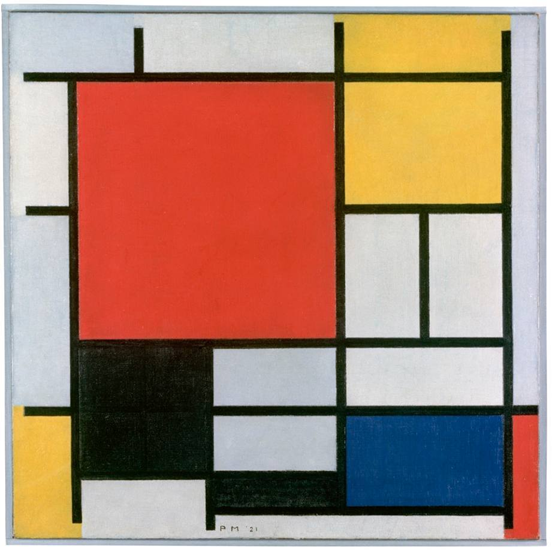
I see my final exam as a continuation of the productions I made this school year. The performance will be improvised and I will use the sonic vocabulary I have collected so far. Because I want to inspire the way we approach the improvisations, I devised a structure for how we will do this. Inspired by the chemical phases of matter (solid, liquid and gas) and phase transitions (for example melting, solidifying and evaporating), I want to improvise sound worlds together with the other musicians, forming a large arc of music for the final exam. I find the transitions especially important: can the material, ideas and sound worlds solidify or melt so that you gradually arrive in a new sonic world? How the big arc will look exactly can go in many directions: we could pass through all three stages, or we might stay in the first stage, or during the performance run the whole process three times. I want to leave this dependent on rehearsal experiences and on the moment. I also want the music to allow time for both performers and listeners to fully inhabit a sound world.
The musicians that are part of my final exam are cellist Joshua Herwig and viola player Oene van Geel, both experienced in classical, contemporary composed and improvised contexts. My main reason for asking them is who they are as musicians and people, and I expect my sonic vocabulary to match the qualities of bowed strings.
I hope that by brainstorming and experimenting together the musicians and I will develop improvised sound worlds regarding sound material, the speed of development of the improvisation, and the density of material. That collective creation is important to me because I think the shared process will give us a joint vision and bring the music to a deeper level.
Because I am concerned with the natural character of sound, I want my final exam to be entirely acoustic. That way everyone has control (and responsibility) over their own sound and I expect we can create a more sensitive listening world with attention to detail. Since lights can also make noise, I need to discuss with the ArtEZ technician how to avoid unnecessary sound in the concert hall while still making the space feel like a concert venue. I think this affects the experience for both musicians and audience. Because I want acoustic performance, I am considering seating the audience around us on chairs so they sit close to the musicians and hopefully become part of the sound world we create.
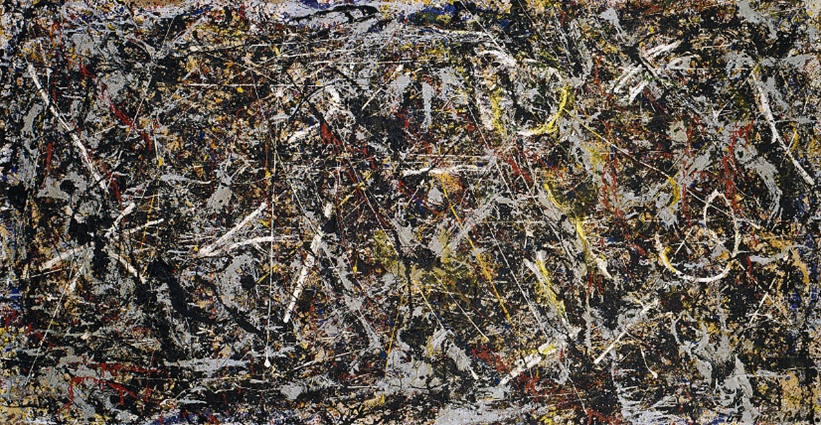
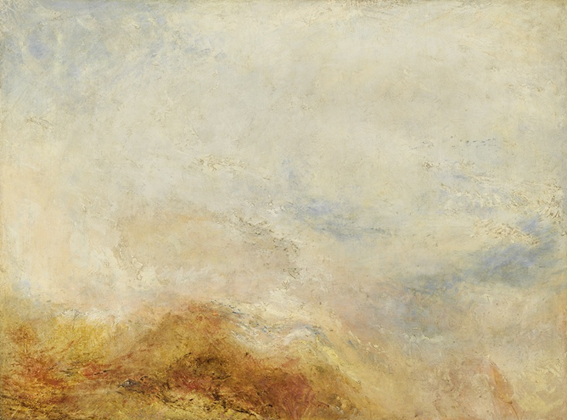
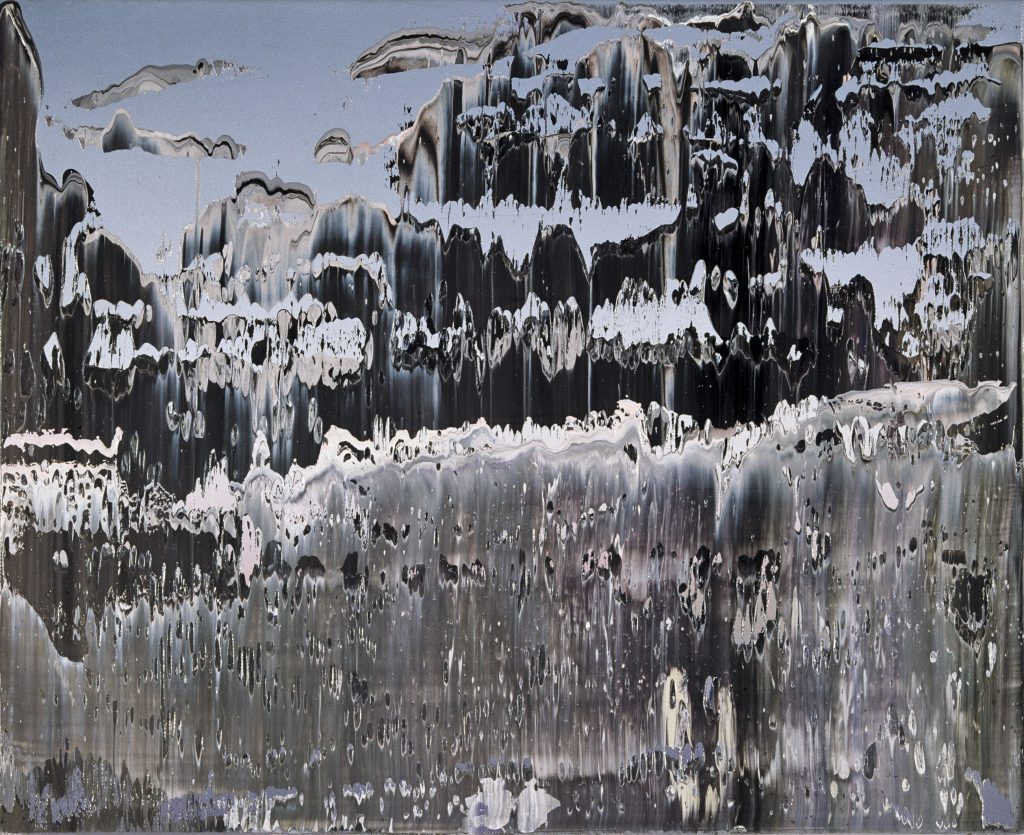
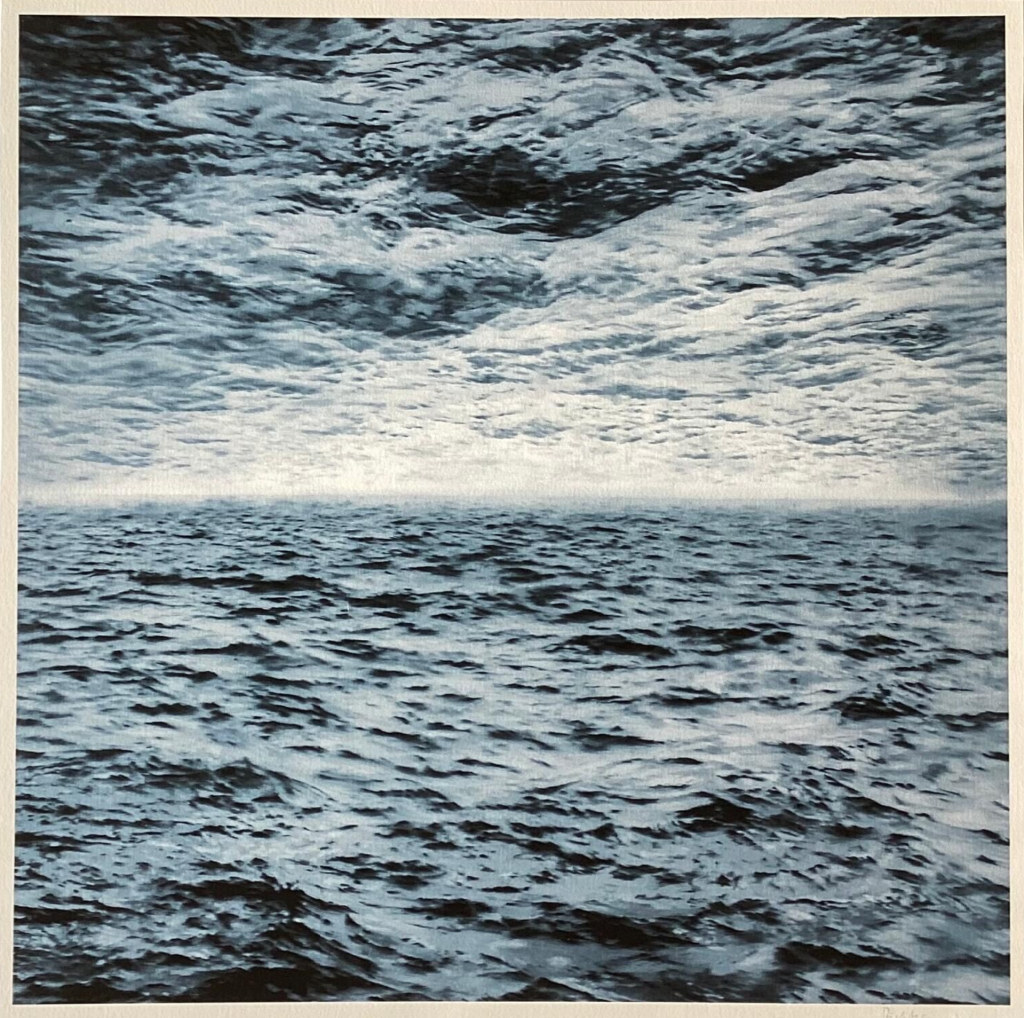
In lessons with Mariëlle Woltering we paid attention to collecting various materials and finding inspiration from non-musical things. I have already started collecting visual artworks that fit the different material stages (see appendix 1) and will expand this collection. I believe this can help the creative process and the eventual sonification. By also thinking visually, I hope my way of improvising will be positively influenced by this. It was also interesting to collect this, because it was a different way for me to work with a subject that was not based on direct sound.
I will focus the remaining lessons on the structure and concept of my final exam. I expect that talking and experimenting with Etienne Nillisen and Oene van Geel will yield more perspectives, ideas and ways to use my sonic material. I also want to investigate whether and how to continue developing this project (and experimental music in general) professionally after graduation.
Future after graduation
After finishing my master I hope to find my place in the world of improvised and experimental music/art. If I follow my curiosity, this world feels like one I want to be part of. Ideally I will create and perform my own projects. I also want to participate in other makers’ projects (music and other disciplines) to add my ideas and concepts. I know (because teachers pointed it out) there are international spaces for experimental art, but I am aware I am not yet part of that scene and am at the starting phase of where to begin. It is reassuring that such a world exists, because I would like to play the music I want to make and be able to (partly) make a living as a professional musician.
Reflections on master
- Through research and the productions over the past two years I have increasingly succeeded in continuously questioning myself and what I write (for example for productions), which makes me more specific about what I am looking for and want. On the other hand, I have learned that there does not always need to be an immediate answer to a question; often an important step is simply asking yourself questions.
- The master helped me further develop from drummer to maker. I composed pieces: in my first year mainly in more traditional ways (lead sheets with melodies and chords). In my second year I discovered I can also work from structures or concepts, which is still composition but from a more abstract base. I can still grow here because options feel endless.
- Especially in my second year I took the step—starting with the extended technique lessons with Etienne Nillisen—to further develop as a percussionist (as described in Production 1). I can continue to develop by deepening the sounds/techniques, searching for new methods/sounds and continuing to use them in musical contexts.
- My ears and mind opened to different ways of improvising: where I first knew the “traditional way” focused on soloing, I explored and deepened other forms. I learned and experienced the difference between noodling/making sounds and making deliberate musical choices in improvisation. Improvisation remains mysterious to me—that not knowing what will happen is its point. That risk makes it a difficult form but is exactly why I’m drawn to it.
- When I started the master I knew it was not easy to enter the professional field as a musician/maker and make a living from creating music. I hoped to take steps toward that in this master, but that pressure also blocked my experimentation: I was focused on the result and left little space for the process. I learned that by researching and not knowing in advance you find and make more authentic things. This mindset is still developing in me; two years is short for that.
- In hindsight I wish I had spread my 32‑hour lessons more evenly over the year in my second year. I felt I had to get everything out of a lesson, so when I felt uncertain I avoided scheduling lessons. In retrospect lessons could have helped make my search more concrete and provided entry points to continue working.
- I learned I like things concrete, such as having a clear research. But as a maker it is important to sometimes not know exactly how I will do something or what the outcome will be. That openness lets me enter a process and be surprised by outcomes. That open mindset is important to me as a person and improviser.
- I also became aware that the critical voice in my head can stand in my way. It is important not to confuse myself with the musician I am, and I am learning how to deal with my inner critic.
- Compared with the study plan I made last year, almost everything changed. For example, I planned to define myself as an artist with Mariëlle Woltering, but because I realized I was not yet the artist I wanted to be, we focused on creativity, how to open it in myself, and the shift from end-result focus to process. I still plan lessons with Oene van Geel in May because earlier this year I didn’t get to focus on composition. The productions I planned last year all changed. During the year topics emerged that felt important to pursue in my process. I think adapting my plans to the moment was the right choice. That flexibility and openness fit the musician/maker/person I want to be, and balance the practical/concrete side of me that likes structure.
Appendix 1